When you pick up a product and admire its packaging, have you ever wondered how that box was shaped so precisely? The answer usually comes down to something called a dieline. Understanding what a dieline is, and why it matters so much in design and production, helps explain how custom packaging is cut, folded, and printed without error.
What is a Dieline?
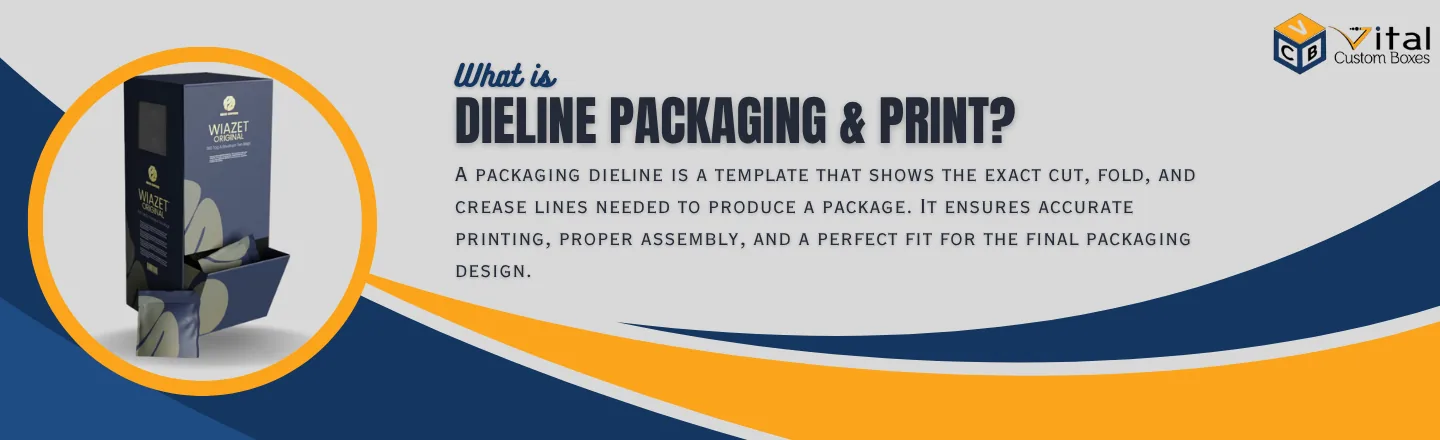
A dieline is a template used throughout the packaging and printing industry that outlines the exact shape of a product's packaging. It shows where cuts, folds, creases, and perforations need to occur, guiding production so the package fits together properly and is trimmed in all the right places. In simpler terms, a dieline is like a blueprint. It is a flat design that shows how a box will look once it is fully cut and folded into its finished three-dimensional form, which is why it is so important for designers and manufacturers who need to produce packaging without mistakes.
Why Dielines Are Important
Dielines matter for several reasons. First, they help with error detection and proofing. Because the dieline shows how the cuts and folds will be made, designers and manufacturers can spot any problems early, well before the packaging goes into production. Second, a dieline lets everyone visualize the final package in three dimensions. By studying how the flat layout folds into shape, the team can confirm that the packaging will work as intended once it is produced. Finally, dielines are essential to die cutting and prototyping. They show the exact spots where the die will cut the material, and they are used to create prototypes so a brand can test the design before committing to a full production run.
Common Dieline Examples
There are several dielines you might come across in everyday packaging. A cardboard box dieline is used for designing shipping boxes, showing where the box should be folded and cut so it assembles correctly. A soap box dieline is built to hold a bar of soap securely while displaying branding clearly, including flaps, folds, and spaces for labeling. Custom packaging dielines go a step further: they are specially designed to match a product's unique shape and size, ensuring a perfect fit that protects the contents while showcasing the design.
How to Read a Dieline
Reading a dieline can look complicated at first, but the basics make it manageable. A dieline uses different lines to represent cuts, both straight and curved, along with folds and perforations, and these are usually marked in distinct colors or line styles so each action is easy to tell apart. Die-cutting marks indicate where the machine will make its cuts, which is essential for precise, repeatable trimming. Some designs extend slightly beyond the dieline in an area called the bleed, which ensures artwork runs all the way to the edge with no white borders showing. Fold and flap markings, often shown as dashed lines, indicate where the package should be folded and how the tuck flaps come together during assembly.
How to Create a Dieline
Creating a dieline takes both design skill and structural design software. The process generally starts in professional tools such as Adobe Illustrator or ArtiosCAD, which offer features for laying out packaging accurately. From there you define the flat size and layout, the unfolded version of the package that includes every fold, cut, and perforation. Next you mark all of those cut lines, fold lines, and perforations clearly, since correct placement keeps the manufacturing process smooth. Once the design is ready, it is saved in a suitable format, typically a vector file such as AI, EPS, or PDF, so it can be used directly by the die-cutting equipment in production.
The Die-Cutting Process
The die-cutting process is the stage where the dieline is used to physically cut the material into the required shape. The die itself is a sharp metal blade formed into the outline of the dieline and pressed onto the material, such as cardboard, to make precise cuts. Die cutting produces clean, accurate shapes, and it matters because it allows large quantities of packaging to be made quickly and consistently.
Final Thoughts
Understanding dielines is essential for anyone involved in packaging design or production. A dieline is the blueprint that ensures packaging is created accurately, fits perfectly, and looks the way it should. Whether you are working on a cardboard box, a soap box, or any other style of packaging, a well-prepared dieline makes the entire process smoother and far more error-free. If you are unsure about preparing your own, working with experienced packaging professionals is a reliable way to get a dieline that fits your product perfectly.