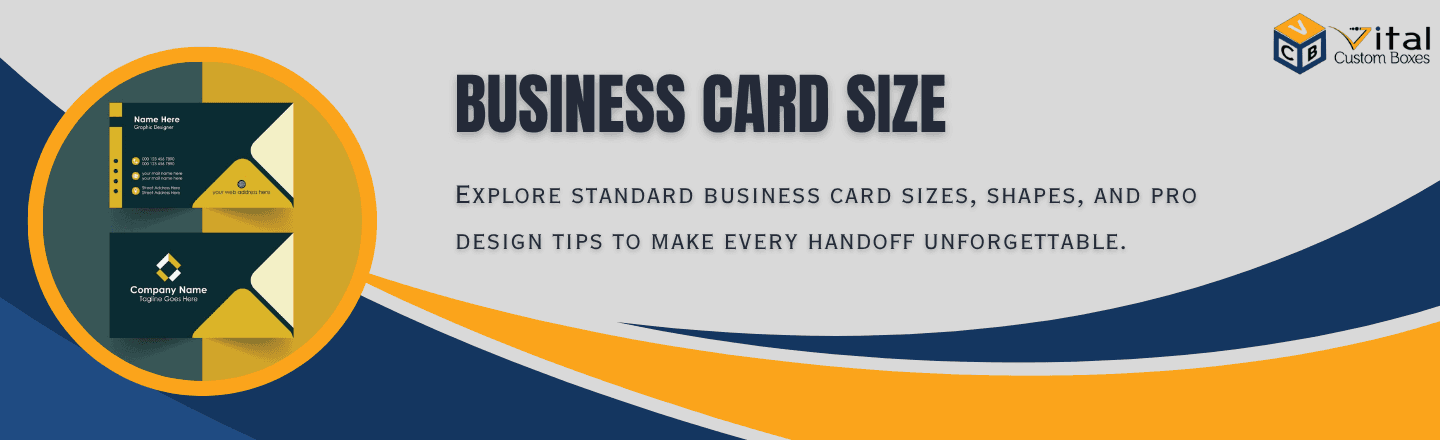
In a digital world, it may seem like business cards are losing relevance, but the opposite is true. A well-designed business card remains one of the most powerful branding tools available. It is more than a piece of paper; it is a physical representation of your professionalism, your brand identity and the first impression many people will have of your business. Understanding business card size, layout and design options is essential when creating marketing materials that leave a lasting impression.
Why Business Cards Still Matter
The value of business cards lies in their simplicity and impact. They are quick to share, easy to carry and can communicate your brand message in seconds. While online profiles and websites are useful, handing over a card in person adds a human touch that digital interaction lacks; it shows preparedness, professionalism and attention to detail. Business cards are also versatile across settings, from corporate networking events to client meetings and seminars, and they work well included in mailed packages, displayed at front desks, or handed out at conferences and trade shows. In any setting, they keep your name, contact information and brand at a prospect's fingertips.
The Standard Business Card Size
In the United States, the standard size is 3.5 by 2 inches, or 88.9 by 50.8 mm. This strikes a balance between portability and space for essential information, fitting easily into wallets, cardholders and organizers, though dimensions can vary slightly with regional preferences or custom choices. When designing, consider not just the trimmed size but the extra space needed for printing and cutting. Cards are printed slightly larger to account for bleed, a safety margin that ensures colors and images extend to the very edge after trimming. For a standard card, the bleed size is typically 3.75 by 2.25 inches, while the safe area where important content should sit is slightly smaller at 3.25 by 1.75 inches, which helps avoid cutting off text or logos.
Standard Sizes Around the World
Business card sizes are not universal. While the United States and Canada use 3.5 by 2 inches (88.9 by 50.8 mm), the United Kingdom commonly uses 3.3 by 2.1 inches (85 by 55 mm). Japan favors 3.58 by 2.17 inches (91 by 55 mm), Australia uses around 3.54 by 2.165 inches (90 by 55 mm), and much of Europe settles near 3.346 by 2.165 inches (85 by 55 mm). Each format evolved to match regional preferences and printing standards, so whether you print locally or send designs abroad, confirm the standard size for the area you are targeting.
Different Shapes and Sizes
While rectangular cards are the most common, many professionals and creative brands turn to non-traditional formats to stand out. Shape is not only about appearance; it affects how a card is handled, stored and remembered, and a distinctive card can set your brand apart from a sea of standard rectangles. Square cards, often 2.5 by 2.5 inches, feel modern and compact. Mini cards, around 3 by 1 inch, offer a unique look while limiting content to the essentials. Rounded-corner cards keep the standard size but add a sleek, premium touch, and custom-shaped cards cut into circles, ovals or bespoke outlines are all about memorability and creative expression, which makes them popular in fashion, tech and design.
Layout Tips
To print cleanly, extend background colors one-eighth of an inch beyond the trim line at the 3.75 by 2.25 inch bleed size, and keep text and logos within the 3.25 by 1.75 inch safe zone. The trim line, or final document size, is 3.5 by 2 inches, and a vertical layout simply flips those dimensions to 2 by 3.5 inches for a creative spin that still meets professional standards.
Paper Stock and Finishes
Paper stock defines how a card feels in hand and how well it withstands wear. The 14pt and 16pt cardstocks are industry standards, sturdy yet not too thick. A matte finish gives a soft, non-reflective look, while a glossy finish adds shine and enhances color vibrancy for logos or photos. Linen-textured stock offers a subtle pattern for added sophistication, and recycled or kraft stock suits environmentally conscious brands. Thickness typically ranges from 14pt to 32pt: thinner cards are budget-friendly for high-volume distribution, while thicker cards feel more luxurious and durable, since heavier cards tend to feel more substantial and trustworthy.
Extra Design Touches
To elevate a card beyond the basics, consider double-sided printing to add more information or split branding and contact details across two faces, and folded cards for appointment cards or bilingual designs. Spot UV coating adds glossy highlights to logos or titles, embossing and debossing add tactile depth, and metallic foil or edge painting adds finishing touches that signal creativity. Options such as rounded corners, die-cut shapes, raised ink or QR code integration add personality and polish, and paired with the right dimensions they create a card that both informs and impresses.
Conclusion
Understanding the dimensions of a business card is crucial for creating professional, memorable brand collateral. Whether you stick to the standard 3.5 by 2 inch card or opt for a custom design, always prioritize clarity, layout and tactile feel. Business cards may be small, but when designed thoughtfully they deliver big results, so choose your size wisely and make each card count.